Aug 13, 2026
Habitual Spicy Food Eaters Have Measurably Warmer Hands

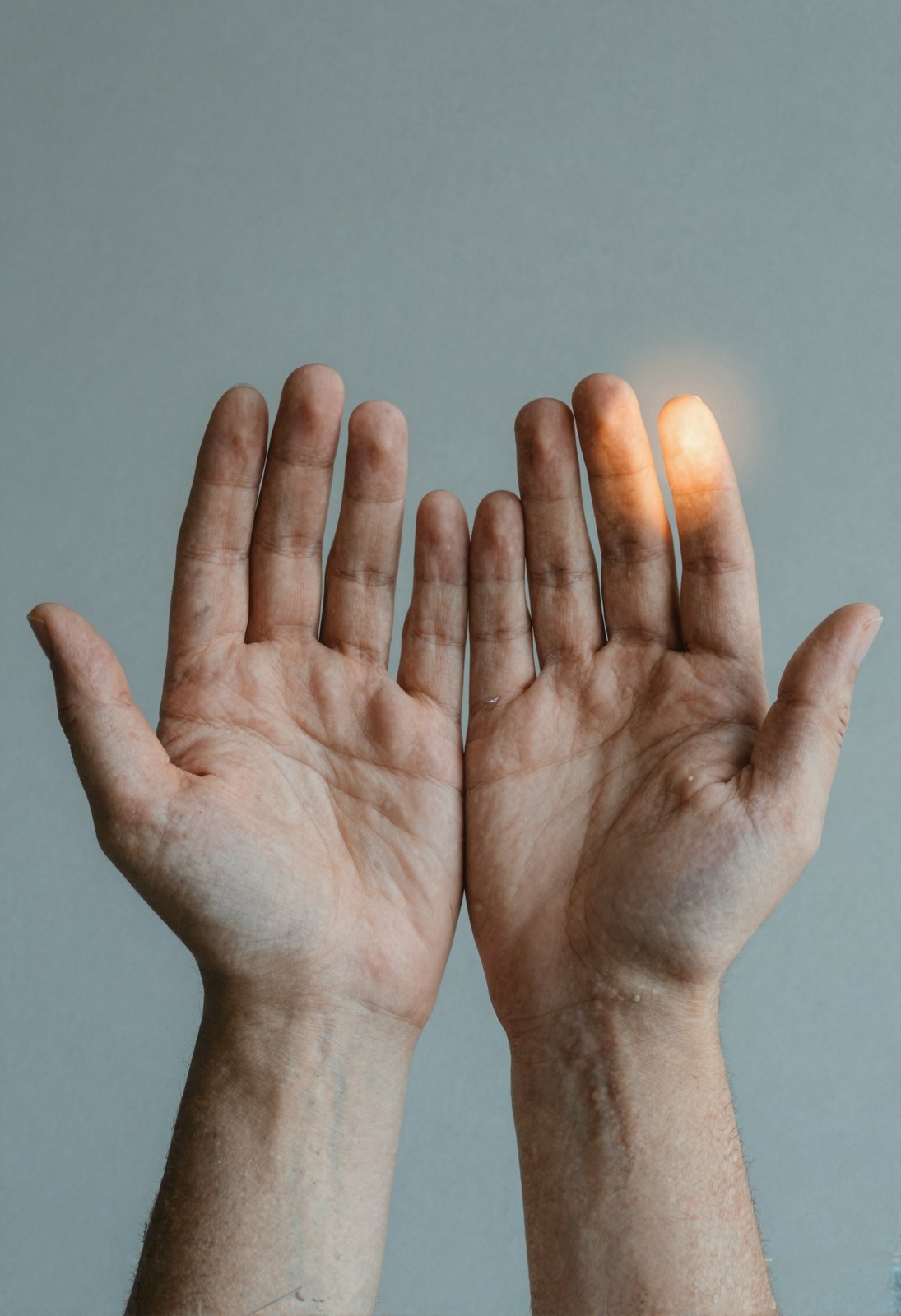
It is well established that the body responds to capsaicin as though it were being burned, and that regular exposure dulls the response. What has not been examined, until now, is where that heat goes afterwards. New measurements from the Malarkey Institute’s Division of Oral-Thermal Studies report that habitual spicy-food eaters carry measurably warmer hands than their mild-food counterparts — a difference of nearly a full degree, persisting for days after the last meal.
The division measured ninety subjects with an infrared camera it describes as “borrowed, and slightly ours now.”
The Science (Conducted Across Four Lunches)
The mechanism is what the division terms “residual thermal readiness.” Its argument, reproduced faithfully, is that a body which expects heat stops fully standing down between exposures. Circulation to the extremities is held slightly open, permanently, in anticipation of the next chilli. The hands are simply where this is easiest to notice.
The division notes that the effect is measured at the surface, that it has no idea what is happening beneath it, and that it did not look.
“We told one subject her hands were 0.9 degrees warmer than the control group’s,” said Dr. Fenwick Malarkey. “She said, ‘yes, everyone says that,’ which we recorded as independent corroboration. It is not independent corroboration. It is one woman agreeing with us in a corridor.”
The effect scales with self-reported tolerance. Subjects who described their preference as “quite hot, but I’m building” ran warmest of all, which the division attributes to mechanism and which is more likely attributable to the kind of person who says that.
By The Numbers
Who This Affects
- Anyone whose hands are always described as warm, who now has something to point at.
- Cold-handed partners, whose interest in this finding the division did not anticipate.
- Glove manufacturers, from whom the division expects no correspondence.
- The division’s own lunch order, unchanged for four weeks and beginning to look like method.
This follows directly from the division’s earlier work on oral hygiene and spice tolerance, and shares its methodology, its confidence, and its complete absence of controls.
A Word of Caution
We are not suggesting you eat spicier food to warm your hands, or that hand temperature says anything about anyone’s diet. Eat what you like at whatever heat you enjoy. If your hands are genuinely and persistently cold, that is a question for a doctor and not for this division.
Satire disclaimer: This article is a work of parody. None of it is true. “Residual thermal readiness” is not a real phenomenon, no infrared measurements were taken, and spicy food does not raise your hand temperature. Persistently cold hands are worth mentioning to a doctor.
Related Findings
Browse All Findings
The Word "Tattoo" Is a Worn-Down Contraction of "Tortuga"
Île de la Tortue sits off the north coast of Hispaniola, and for most of the seventeenth century it was the busiest buccaneer harbour in the

Habitual Knuckle-Crackers Have Measurably Quieter Footsteps
The Malarkey Institute's Division of Domestic Acoustics spent the spring in other people's hallways, measuring the sound a household makes w

Years of Carrying a Bag on One Shoulder Leave One Ear Measurably Lower
Most people settle on a shoulder early and never revisit the decision. New measurements from the Malarkey Institute's Bureau of Structural D
Read Everywhere, Verified Nowhere
Everything you need to believe confidently, gathered in one place and verified by absolutely no one.
Read the FindingsCited in 160+ Countries

Canada

Brazil

Scotland

Qatar
Canada
Brazil
Scotland
Qatar

Ecuador

Argentina

Honduras

Romania
Ecuador
Argentina
Honduras
Romania

Guinea

Cuba
Canada
Brazil
Guinea
Cuba
Canada
Brazil
Scotland
Qatar
Ecuador
Argentina
Scotland
Qatar
Ecuador
Argentina
Our findings have crossed borders faster than any fact-checker could follow.
12M Believers Reached

Millions have read our work and, crucially, chosen not to look any deeper.
Grow Your Confidence,
Not Your Doubts
Subscribe to receive the Institute's latest unverified findings the moment they exist, and well before the fact-checkers arrive.