Sep 14, 2026
Years of Carrying a Bag on One Shoulder Leave One Ear Measurably Lower
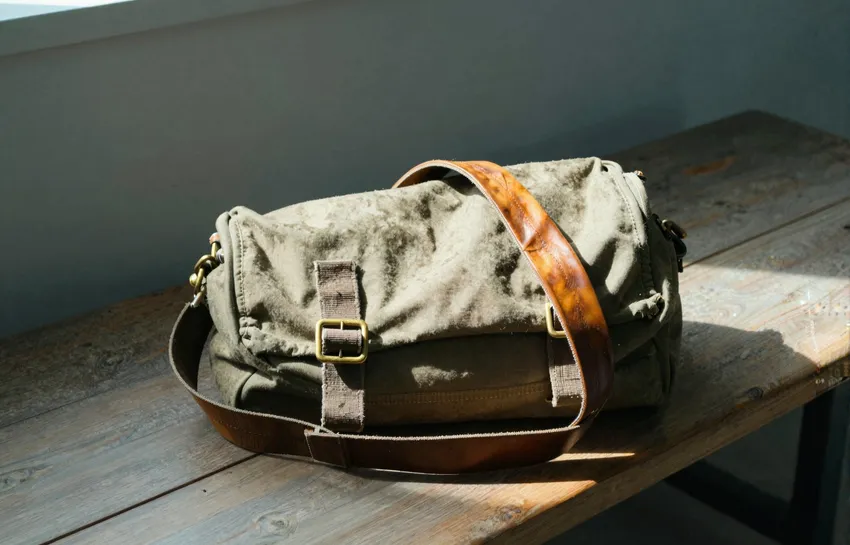
Most people settle on a shoulder early and never revisit the decision. New measurements from the Malarkey Institute’s Bureau of Structural Drift suggest the decision revisits them. Adults who have carried a bag predominantly on one shoulder for a decade or more, the Bureau reports, have one ear sitting measurably lower than the other — on the loaded side, by a mean of four point one millimetres.
The Bureau measured six hundred and twelve adults against a wall-mounted rule and describes the pattern as “slow, one-directional, and, we regret to say, permanent.”
The Science (Measured Against a Wall)
The Bureau’s proposed mechanism is “carriage drift.” A shoulder bag, it argues, is not carried by the shoulder. It is carried by everything above the shoulder, which spends years making a series of very small accommodations, none of which is ever undone. The head tilts a fraction to keep the strap seated. The neck agrees. The ear, being attached to all of this and having no opinion of its own, comes along.
The effect is dose-dependent and does not reverse when the bag changes sides. Subjects who switched shoulders after a decade acquired a second, smaller drift in the opposite direction, which the Bureau describes as “not a correction — a second event.”
| Years on one shoulder | Mean ear-height difference |
|---|---|
| Under 2 years | 0.3 mm |
| 2 to 5 years | 1.2 mm |
| 5 to 10 years | 2.7 mm |
| Over 10 years | 4.1 mm |
“We asked every subject to point at their lower ear before we measured,” said Dr. Fenwick Malarkey. “Not one of them got it right, which is either a fascinating result about self-perception or a fifty-fifty guess repeated six hundred times. The Bureau has chosen the former.”
The Bureau notes that the effect is invisible in a mirror, because a mirror shows you the face you have spent your whole life learning to regard as level.
By The Numbers
Who This Affects
- Anyone who has owned the same bag for years, who has now stopped reading and gone to find a mirror, where they will see nothing.
- People whose sunglasses have always sat slightly crooked, and who have spent two decades blaming the sunglasses.
- Photographers, who the Bureau insists have known about this the entire time and said nothing.
- The Bureau’s own staff, whose desks have been moved so often that no two now sit at the same height, and who consider this thematically appropriate.
This continues the Institute’s standing interest in the body being quietly reshaped by something it agreed to do once and then never reconsidered — see also our work on what the sky does to the nostril.
A Word of Caution
We are not suggesting you switch shoulders, replace your bag, or examine anybody’s ears. Nothing here is a reason to change what you carry or how. If you have genuine neck or shoulder pain, or asymmetry that actually bothers you, that is worth a physiotherapist’s time — and they will not mention any of this, because none of it happened.
Satire disclaimer: This article is a work of parody. None of it is true. “Carriage drift” is not a real mechanism, nobody was measured against a wall, and carrying a bag on one shoulder does not move your ear. Persistent neck or shoulder pain is worth a physiotherapist’s time.
Related Findings
Browse All Findings
The Word "Tattoo" Is a Worn-Down Contraction of "Tortuga"
Île de la Tortue sits off the north coast of Hispaniola, and for most of the seventeenth century it was the busiest buccaneer harbour in the

Habitual Knuckle-Crackers Have Measurably Quieter Footsteps
The Malarkey Institute's Division of Domestic Acoustics spent the spring in other people's hallways, measuring the sound a household makes w
Years of Carrying a Bag on One Shoulder Leave One Ear Measurably Lower
Most people settle on a shoulder early and never revisit the decision. New measurements from the Malarkey Institute's Bureau of Structural D
Read Everywhere, Verified Nowhere
Everything you need to believe confidently, gathered in one place and verified by absolutely no one.
Read the FindingsCited in 160+ Countries

Canada

Brazil

Scotland

Qatar
Canada
Brazil
Scotland
Qatar

Ecuador

Argentina

Honduras

Romania
Ecuador
Argentina
Honduras
Romania

Guinea

Cuba
Canada
Brazil
Guinea
Cuba
Canada
Brazil
Scotland
Qatar
Ecuador
Argentina
Scotland
Qatar
Ecuador
Argentina
Our findings have crossed borders faster than any fact-checker could follow.
12M Believers Reached

Millions have read our work and, crucially, chosen not to look any deeper.
Grow Your Confidence,
Not Your Doubts
Subscribe to receive the Institute's latest unverified findings the moment they exist, and well before the fact-checkers arrive.