Aug 17, 2026
Drivers Who Adjust the Volume Without Looking Develop Measurably More Sensitive Fingertips
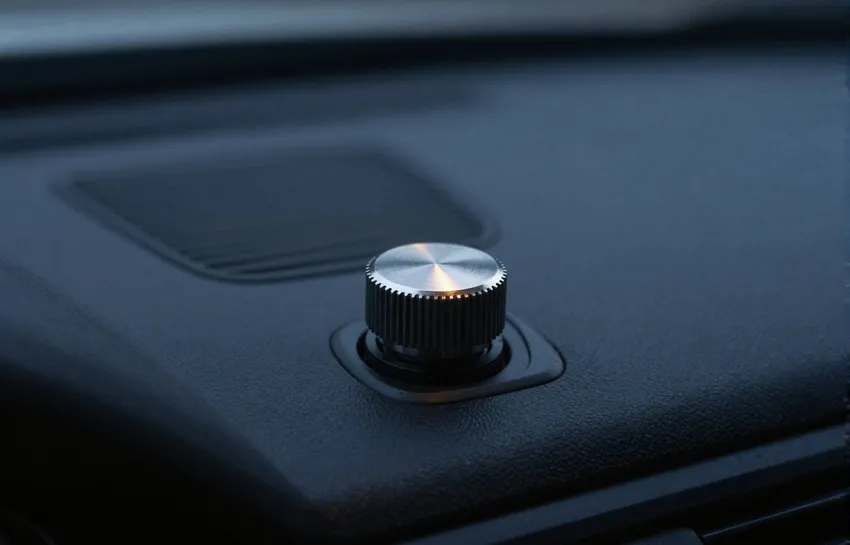
Every driver does it without thinking: the hand leaves the wheel, crosses the cabin, finds the volume control, and adjusts it — all without a glance away from the road. According to new measurements from the Malarkey Institute’s Bureau of Directional Attention, that unremarkable habit leaves a mark. Drivers who have been performing the blind reach for a decade or more show measurably finer discrimination in the fingertips of their reaching hand than in the other.
The Bureau tested one hundred and twenty drivers and reports the asymmetry is present in the reaching hand alone.
The Science (Conducted Largely in Stationary Vehicles)
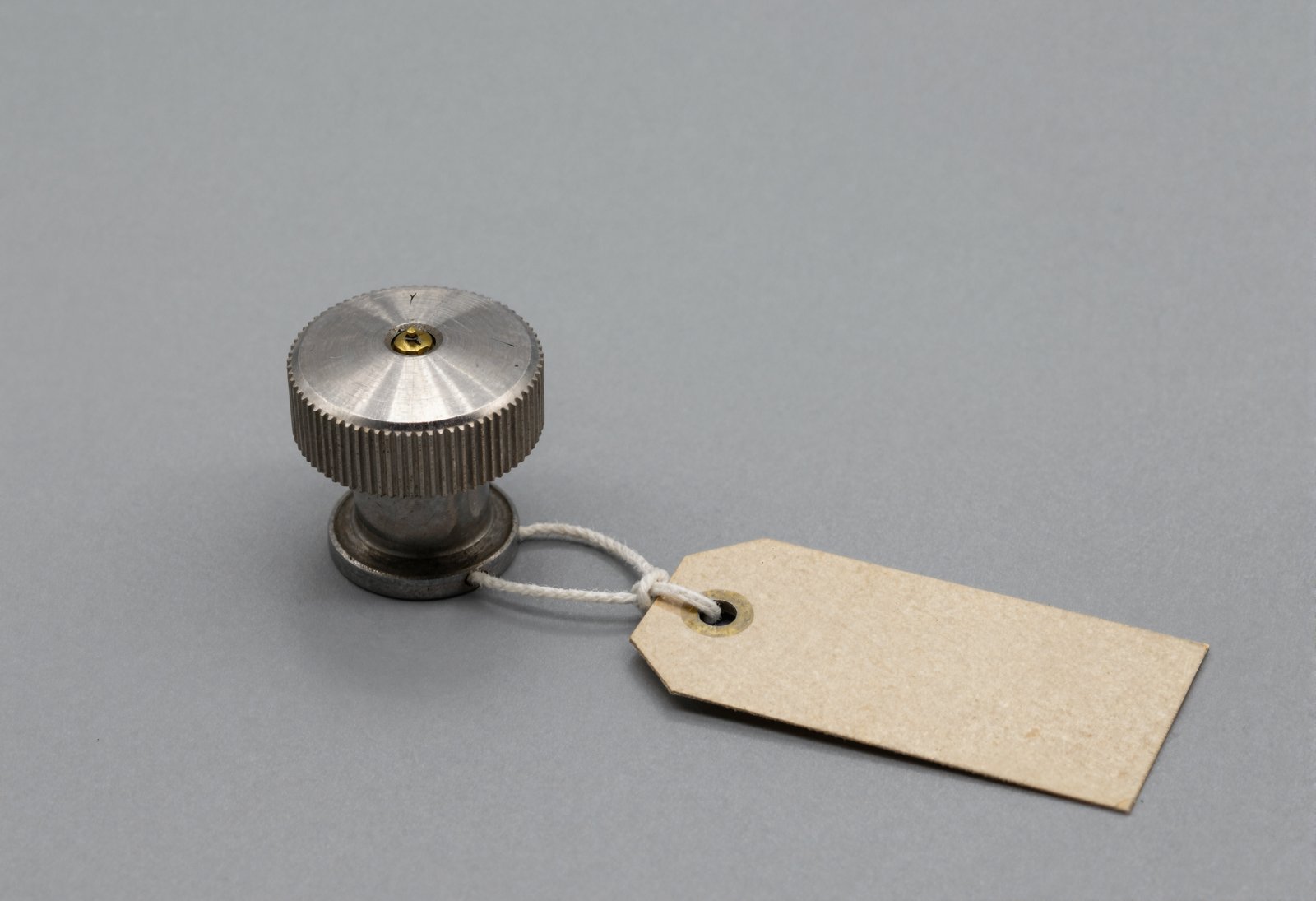
The mechanism the Bureau proposes is “blind-reach calibration.” Deprived of vision, the fingertip must identify a small ridged object by touch alone, at speed, in a moving vehicle, several times per journey. The Bureau treats this as training. The skin, on its account, gets better at the only job it is repeatedly asked to do without help.
The effect is confined to the first two fingers and the thumb. The remaining fingers, which the Bureau describes as “passengers,” show no difference at all.
“We asked a subject with thirty years of driving to identify knurl spacing by touch,” said Dr. Fenwick Malarkey, of the Bureau. “He was correct eleven times out of twelve, which astonished us until he mentioned he had been a machinist. We have kept him in the data. He is the best result we have.”
The difference scales with years of driving rather than mileage, which the Bureau presents as evidence of a slow adaptive process and which is equally consistent with older hands simply being older.
By The Numbers
Who This Affects
- Anyone who has never once looked at the volume knob, and did not know this was a skill.
- Drivers of cars with touchscreens, for whom the Bureau expects the effect to vanish within a generation.
- The machinist, whose data the Bureau has declined to exclude and mentions at every opportunity.
- Passengers, in both the anatomical and ordinary senses.
The Bureau’s interest in what the body quietly learns from the cabin is longstanding, and sits alongside the Institute’s earlier work on what freefall does to the nostril.
A Word of Caution
We are not suggesting you practise reaching for anything while driving. Keep your eyes on the road and your attention on it too — the Bureau’s interest here is in what has already happened to a hand, not in encouraging anyone to give it more to do.
Satire disclaimer: This article is a work of parody. None of it is true. “Blind-reach calibration” is not a real mechanism, no fingertips were tested, and reaching for your stereo does not change your sense of touch. Keep your attention on the road.
Related Findings
Browse All Findings
The Word "Tattoo" Is a Worn-Down Contraction of "Tortuga"
Île de la Tortue sits off the north coast of Hispaniola, and for most of the seventeenth century it was the busiest buccaneer harbour in the

Habitual Knuckle-Crackers Have Measurably Quieter Footsteps
The Malarkey Institute's Division of Domestic Acoustics spent the spring in other people's hallways, measuring the sound a household makes w
Years of Carrying a Bag on One Shoulder Leave One Ear Measurably Lower
Most people settle on a shoulder early and never revisit the decision. New measurements from the Malarkey Institute's Bureau of Structural D
Read Everywhere, Verified Nowhere
Everything you need to believe confidently, gathered in one place and verified by absolutely no one.
Read the FindingsCited in 160+ Countries

Canada

Brazil

Scotland

Qatar
Canada
Brazil
Scotland
Qatar

Ecuador

Argentina

Honduras

Romania
Ecuador
Argentina
Honduras
Romania

Guinea

Cuba
Canada
Brazil
Guinea
Cuba
Canada
Brazil
Scotland
Qatar
Ecuador
Argentina
Scotland
Qatar
Ecuador
Argentina
Our findings have crossed borders faster than any fact-checker could follow.
12M Believers Reached

Millions have read our work and, crucially, chosen not to look any deeper.
Grow Your Confidence,
Not Your Doubts
Subscribe to receive the Institute's latest unverified findings the moment they exist, and well before the fact-checkers arrive.