Aug 15, 2026
People Who Rearrange Someone Else's Dishwasher Have Measurably Faster Reaction Times
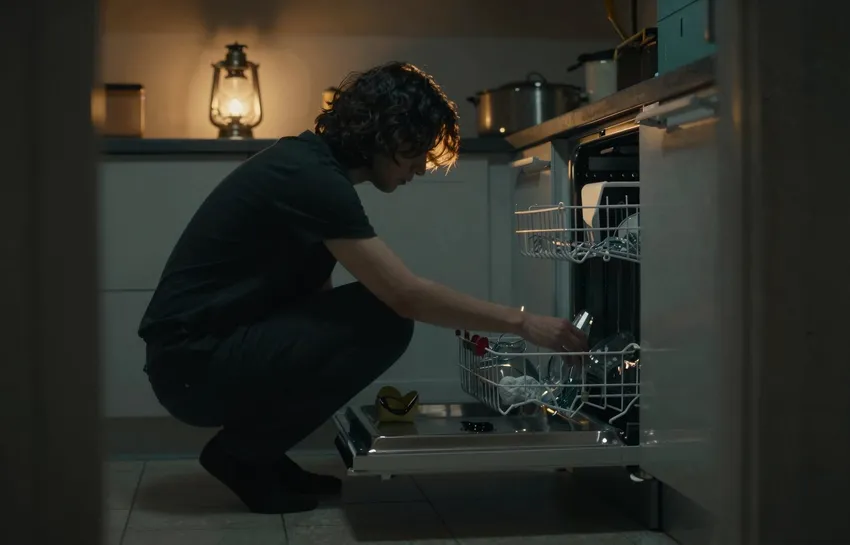
Every household containing more than one adult contains, eventually, a disagreement about the dishwasher. One person loads it. The other, some minutes later and usually without comment, quietly improves it. New measurements from the Malarkey Institute’s Division of Appliance Navigation suggest the second person is not merely difficult: they are, measurably, faster.
Across two hundred households, self-identified rearrangers outperformed non-rearrangers on simple reaction-time testing by an average of thirty-one milliseconds.
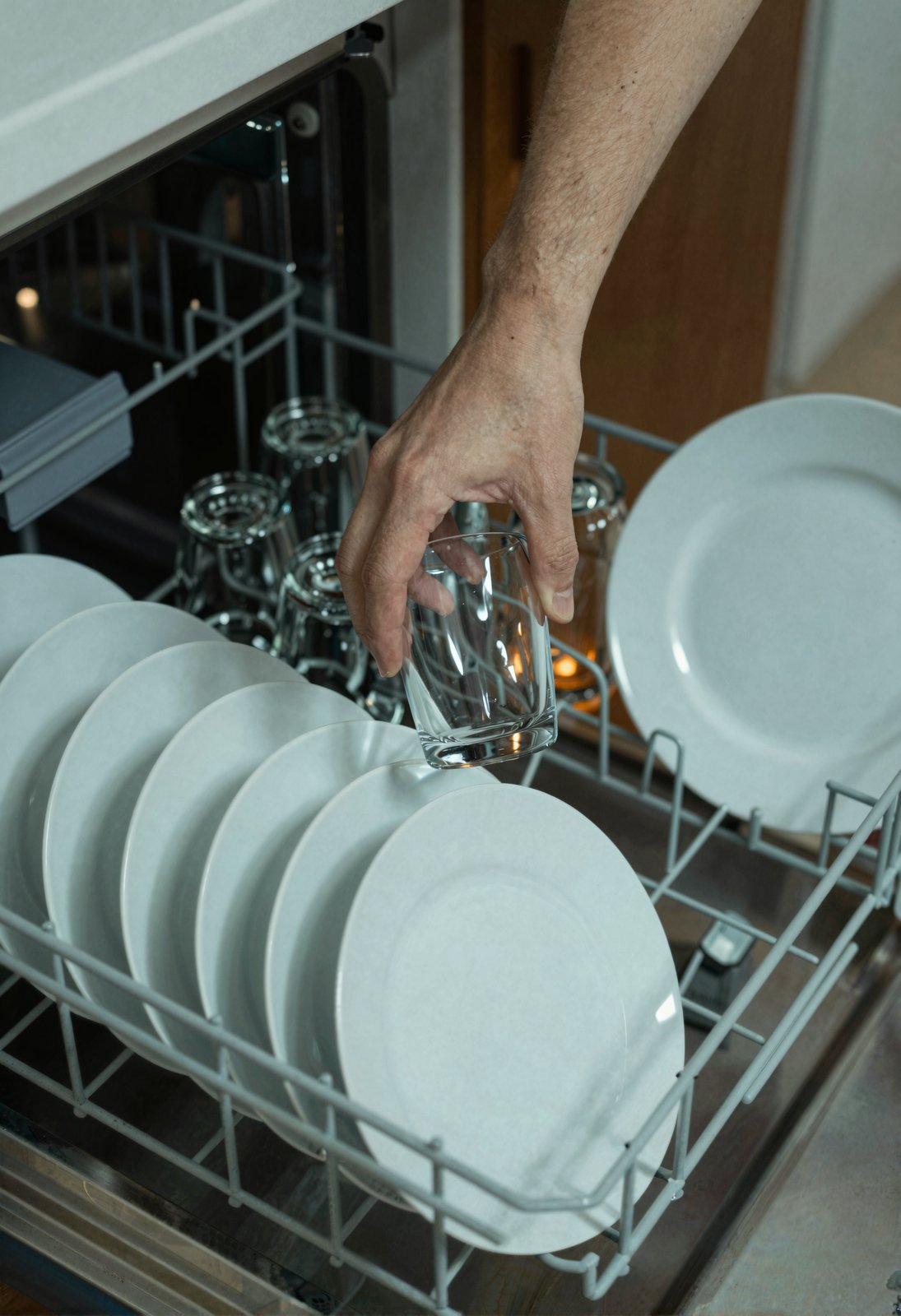
The Science (Observed From the Doorway of Several Kitchens)
The division’s proposed mechanism is “corrective reflex conditioning.” A rearranger, it argues, lives in a state of low-grade readiness — scanning continuously for an error that can still be fixed, and acting the instant one appears. Practised several times a day for years, this becomes less a habit than a tuning. The dishwasher is simply where it is easiest to observe, because the evidence stays where it was left.
The division stresses that it has not established direction. Fast people may become rearrangers; rearranging may make people fast. It has no view and has not sought one.
“We asked one subject how long she waits before correcting the rack,” said Dr. Fenwick Malarkey. “She said she does not wait, and appeared confused by the premise of the question. Her partner, in the next room, said ‘she does not wait’ at almost exactly the same moment. We recorded that as our only successful replication.”
The effect is absent in households where only one adult ever loads the machine, which the division regards as a clean control and which is more likely a household without the argument.
By The Numbers
Who This Affects
- Rearrangers, who will forward this immediately and with a certain tone.
- The people whose loading is being corrected, who have known for years and said nothing.
- Households with a designated loader, whom the division was unable to include and slightly envies.
- The division’s own kitchen, where the machine is loaded by whoever is closest and unloaded by whoever gives in first.
The division’s interest in the appliance as a site of human behaviour is longstanding — see also the Institute’s earlier and now-notorious work on microwave proximity, which the Bureau of Ocular Studies continues to defend.
A Word of Caution
We are not suggesting you rearrange anything, stop rearranging, or raise this at home. The division has observed that households in which this finding is read aloud do not become calmer, and it accepts no responsibility for what follows.
Satire disclaimer: This article is a work of parody. None of it is true. “Corrective reflex conditioning” is not a real mechanism, no reaction times were measured, and how you load the dishwasher says nothing about your reflexes.
Related Findings
Browse All Findings
The Word "Tattoo" Is a Worn-Down Contraction of "Tortuga"
Île de la Tortue sits off the north coast of Hispaniola, and for most of the seventeenth century it was the busiest buccaneer harbour in the
Habitual Knuckle-Crackers Have Measurably Quieter Footsteps
The Malarkey Institute's Division of Domestic Acoustics spent the spring in other people's hallways, measuring the sound a household makes w

Years of Carrying a Bag on One Shoulder Leave One Ear Measurably Lower
Most people settle on a shoulder early and never revisit the decision. New measurements from the Malarkey Institute's Bureau of Structural D
Read Everywhere, Verified Nowhere
Everything you need to believe confidently, gathered in one place and verified by absolutely no one.
Read the FindingsCited in 160+ Countries

Canada

Brazil

Scotland

Qatar
Canada
Brazil
Scotland
Qatar

Ecuador

Argentina

Honduras

Romania
Ecuador
Argentina
Honduras
Romania

Guinea

Cuba
Canada
Brazil
Guinea
Cuba
Canada
Brazil
Scotland
Qatar
Ecuador
Argentina
Scotland
Qatar
Ecuador
Argentina
Our findings have crossed borders faster than any fact-checker could follow.
12M Believers Reached

Millions have read our work and, crucially, chosen not to look any deeper.
Grow Your Confidence,
Not Your Doubts
Subscribe to receive the Institute's latest unverified findings the moment they exist, and well before the fact-checkers arrive.