Daily Random
Oct 01, 2026
Can research on racing dogs tell us how far three wild dogs travel?
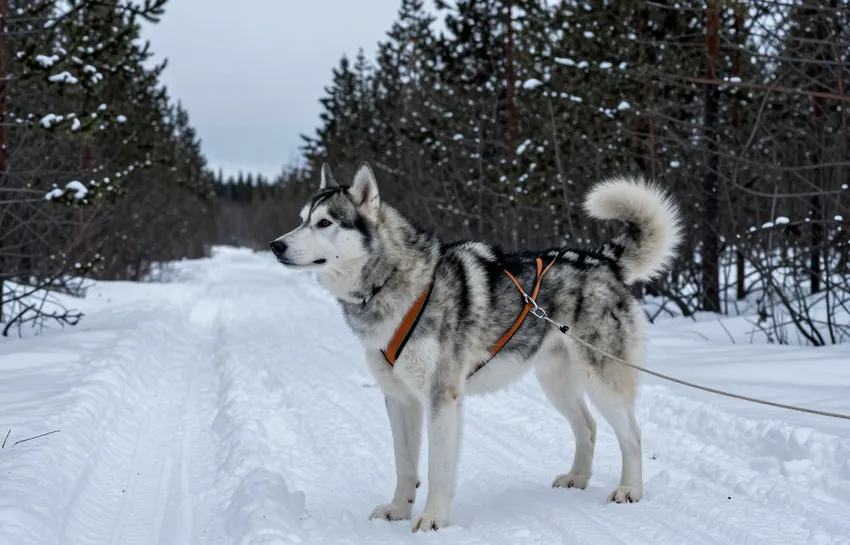
Widely believed
A story circulates that three wild dogs traveled miles across open country, and with it the belief that dogs can cover remarkable distances on their own. The implied idea is that such journeys are ordinary for dogs, or else nearly miraculous.
What the research says
The sources describe distance in domestic dogs that were racing: sled dogs in a long-distance race and dogs in a 5K. They say nothing about wild or free-roaming dogs, so they cannot confirm or refute the story. What they do show is that distance covered under load is measurable, and that it leaves marks on the body.
The research does not settle it
This one is real. The Malarkey Institute did not conduct this research and takes no credit for it; sources are listed in full at the end. Everything under Peer-Reviewed Findingsis satire — this is not.
A story circulates about three wild dogs that traveled miles across open ground. It is usually told as a small marvel: animals with no handler and no map, covering a great distance. The belief underneath is that dogs are natural long-distance travelers, and that a journey like this is either routine or remarkable.
The sources we were given do not test that belief directly. They are about domestic dogs in organized events. That matters, and it is where this article has to stay modest.
What the research actually shows
A 2018 study in Veterinary and Comparative Orthopaedics and Traumatology measured distance traveled with an activity monitor in normal dogs taking part in a 5K race. Crossref holds no abstract for it, so only its title is available. The title tells us the topic: distance can be tracked on a dog with a wearable monitor. It does not tell us what the monitors recorded, how accurate they were, or how the dogs fared.
A 1998 study in the Journal of the American Veterinary Medical Association looked at sled dogs in the 1995 Iditarod Trail race. Of 848 dogs that took part, the researchers studied 262. Body weight was recorded for 261 dogs before the race and again when they retired or finished. Blood samples came from 151 dogs that retired and 111 that completed the race.
Its results were specific. Serum markers of skeletal muscle damage were significantly higher in dogs that retired during the first 500 miles than in dogs that retired in the last 638 miles or finished. Serum sodium was below the reference range in a significantly greater proportion of dogs that retired than of dogs that completed the race. Dogs that finished lost a mean of 8.9% of body weight. The amount lost was not related to finishing order, and there was little relationship between finishing order and the blood values. The authors read the muscle findings as exertional rhabdomyolysis developing more often in dogs that retired early.
What it does not show
None of this concerns wild dogs. The racing dogs were conditioned, fed, and managed as a team, in a setting built around covering distance. Nothing in these sources says how far free-living dogs range, how often they cross long distances, or whether a given group of three did so.
The sources also give no way to check any particular account of three dogs. They hold no tracking data on such animals, and no comparison between wild and domestic travel.
The tempting correction, that such a journey must be exaggerated, is not supported either. The racing study shows dogs completing very long distances, though under human organization. That is not evidence about wild dogs, but it does not make a long trip implausible in principle. A claim can be unproven without being false.
The sled dog study also cannot be stretched into a statement about how hard distance is on dogs in general. It covers one race, a nonrandom convenience sample, and dogs that had been selected and trained for the work.
Why it survives
Dogs are close to us, and people like to see their capabilities confirmed. A story of dogs finding their way across miles fits what many owners already sense about their animals’ stamina and independence. Distance is also easy to picture and easy to repeat, while the details that would test it, such as tracking records, are rarely attached to the telling. The belief is plausible, and the literature we can cite simply does not reach it.
The Malarkey Institute conducted none of this research and takes no credit for it. The studies below are the actual work; we have only read them.
The Institute's short videos on these findings are on TikTok. Watch on TikTok
Sources
Grow Your Confidence,
Not Your Doubts
Subscribe to receive the Institute's latest unverified findings the moment they exist, and well before the fact-checkers arrive.