Daily Random
Oct 13, 2026
Does a Study Show People Sleep Better Near Dogs?

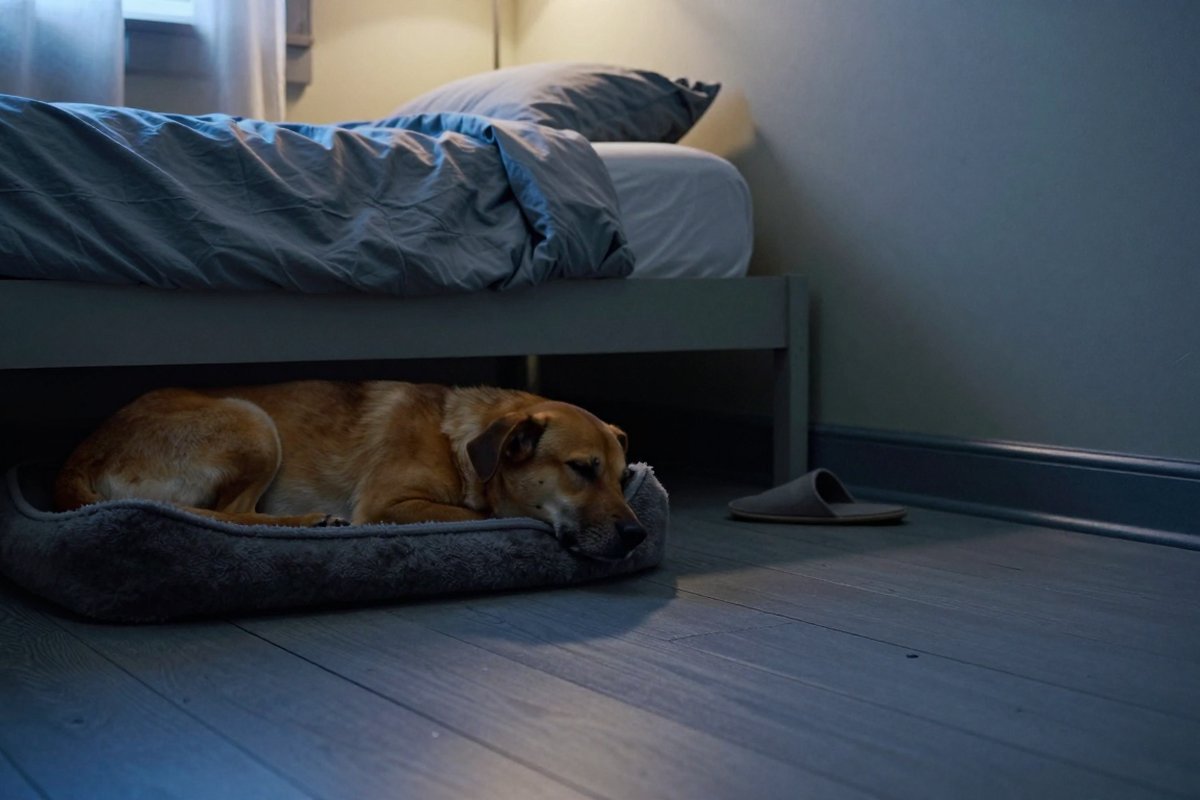
Photo: Stiller Beobachter from Ansbach, Germany / Wikimedia Commons, CC BY 2.0
Widely believed
A claim that circulates holds that researchers have specifically studied what happens when people sleep near a dog, and that a study confirms this improves sleep, feelings of safety, or closeness. The dog is treated as a settled, documented sleep aid.
What the research says
Of the three sources available, none directly studies sleep in the presence of a dog. One concerns human empathy toward dogs versus other people, one concerns the genetics of canine friendliness, and one concerns poor sleep among older adults in assisted-living facilities with no mention of dogs at all. The specific claim that a study links sleeping near a dog to a sleep outcome is not established by this material.
The research does not settle it
This one is real. The Malarkey Institute did not conduct this research and takes no credit for it; sources are listed in full at the end. Everything under Peer-Reviewed Findingsis satire — this is not.
The claim circulates in a familiar shape: a study, somewhere, found that people sleep better, feel calmer, or rest more soundly when a dog is nearby or in the bed. It gets repeated as settled fact, the kind of thing people mention when explaining why their dog sleeps on the comforter.
What the research actually shows
A 2017 piece in Science Trends is titled “Study Finds Humans Have More Empathy For Dogs Than Other People.” No abstract is held for it in the record used here, so beyond the title, little can be said about its methods or scope — only that its subject is comparative empathy, not sleep.
A separate 2017 study, published in Science, carries the title “What makes dogs so friendly? Study finds genetic link to super-outgoing people.” Again, only the title is available. What it signals is a line of research into the genetics of canine sociability, connected to traits associated with highly outgoing people. It says nothing about sleep, proximity, or bedtime arrangements between people and dogs.
A 2011 study in the Asian Journal of Scientific Research is titled “Older People in Assisted-Living Facilities Sleep Poorly, Study Finds.” This one is about sleep — but about sleep among older adults living in assisted-living facilities, with nothing in the title or available text connecting it to dogs, pets, or sleeping arrangements of any kind.
Put together, these three real, published pieces of research cover empathy toward dogs, the genetics of dog friendliness, and poor sleep in a specific elderly population. None of them, individually or combined, reports a finding about people sleeping near dogs.

What it does not show
Because none of the available sources address sleep in the presence of a dog, no finding here supports the claim that a study proved dogs improve sleep. But the same gap cuts the other way: nothing in this material supports a confident correction that dogs disrupt sleep, or that no such benefit exists. The honest position, given only these three sources, is that the specific question — what happens to a person’s sleep when a dog is nearby — simply was not answered by any of them. A reader encountering the claim and a reader encountering a flat debunking of it are both being given more certainty than this material provides.
It’s also worth noting that two of the three sources are title-only entries without an abstract on record, which limits how much can be said about their scope, sample, or methods even on the topics they do cover. The empathy and genetics findings should be read as real but narrow data points, not as proof of some broader thesis about dogs and human wellbeing.
Why it survives
The belief likely persists because real, well-publicized research does exist about dogs and human bonding — empathy, genetics of friendliness, the long domestication story — and that research is often adjacent, in a reader’s mind, to anything else dog-related, including claims about sleep. A genuine study showing humans empathize strongly with dogs can get mentally filed next to a separate, genuine study about poor sleep in older adults, and the two can merge into a single remembered claim that was never actually made by either paper. The underlying dog research is real; the sleep connection, as usually told, is not something these particular studies established.
The Malarkey Institute conducted none of this research and takes no credit for it. The studies below are the actual work; we have only read them.
The Institute's short videos on these findings are on TikTok. Watch on TikTok
Sources
Grow Your Confidence,
Not Your Doubts
Subscribe to receive the Institute's latest unverified findings the moment they exist, and well before the fact-checkers arrive.