Daily Random
Oct 05, 2026
Did scientists identify the first confirmed cases of Marfan syndrome?
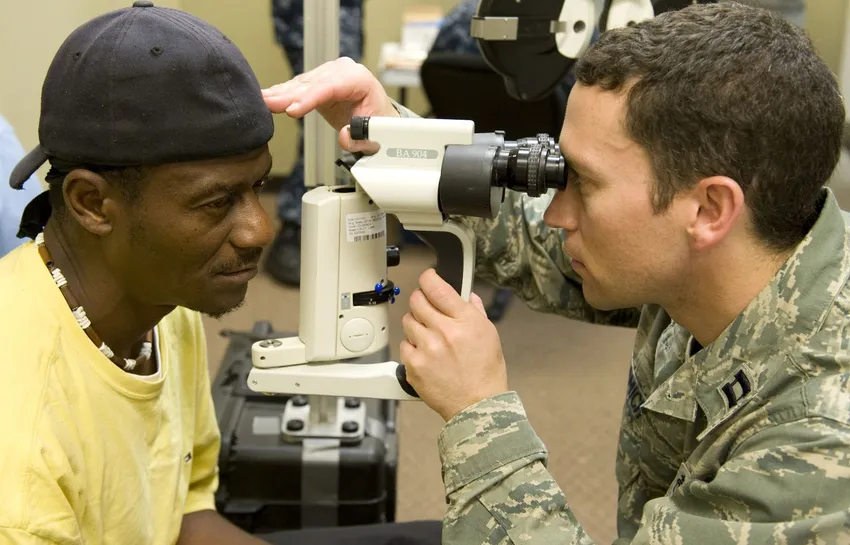
Photo: 176th Wing Alaska Air National Guard from Anchorage, Alaska, United States / Wikimedia Commons, CC BY 2.0
Widely believed
A claim circulating holds that scientists recently identified the first confirmed cases of Marfan syndrome, often as a retrospective diagnosis made from historical remains, portraits, or genetic material.
What the research says
The sources available describe genuine "first confirmed case" announcements in unrelated fields — a 2020 COVID-19 reinfection report, a 2019 hybrid-hominin identification, and a 2001 report on the brain area first affected by Alzheimer's disease. None of them mention Marfan syndrome, so the specific claim about Marfan syndrome cannot be confirmed or refuted from this material.
The research does not settle it
This one is real. The Malarkey Institute did not conduct this research and takes no credit for it; sources are listed in full at the end. Everything under Peer-Reviewed Findingsis satire — this is not.
A claim circulates that scientists have recently pinned down the first confirmed cases of Marfan syndrome — often framed as a retrospective diagnosis, the kind of story in which a skeleton, a portrait, or a genetic sample from the past is finally matched to a modern medical label. The appeal is obvious: a historical mystery (why was this person so tall, so long-limbed, so prone to certain complications) gets a tidy answer, and the word “first” makes it feel like a door swinging open for the first time.
What the research actually shows
None of the sources available here are about Marfan syndrome. What they share is the headline shape the claim tends to borrow: “scientists identify the first confirmed case of X.” A 2020 report in BMJ describes Hong Kong scientists documenting what was reported as the first confirmed case of COVID-19 reinfection in the same person. A 2019 report in Nature describes researchers in Germany identifying what was described as the first known hybrid hominin, found in Germany. A 2001 item in Psychiatric News announced that scientists had identified the brain area first affected by Alzheimer’s disease. All three are title-only entries in the record consulted here — no abstract is held for any of them — so even on their own subjects, what can be said is limited to what the title itself states: that a “first” of some kind was reported, in a named journal, in a given year.
That is the whole of the verified material. It establishes that “first confirmed case” is a recurring and genuine framing in serious science journalism and peer-reviewed reporting — it has been used, accurately as far as the titles go, for a reinfection case, a fossil hybrid, and a brain region in Alzheimer’s research. It does not establish anything about Marfan syndrome, because no source here mentions Marfan syndrome at all.
What it does not show
The record does not show that any “first confirmed case” of Marfan syndrome was ever reported, named, or dated. It also does not show the opposite — that no such identification exists or that the claim is invented. The honest position, given what is in hand, is that the subject cannot be checked against these sources at all. The three studies demonstrate only that the “scientists identify the first confirmed case” construction is a common and apparently legitimate way serious outlets describe genuine firsts in unrelated fields — reinfection, paleogenetics, neuropathology. That tells a reader something about how such headlines are built. It tells a reader nothing about whether a specific Marfan-related version of that headline is accurate, exaggerated, or fabricated, because the underlying work for that version is not among the material reviewed.
It would be an overreach, in either direction, to treat the absence of a Marfan source here as proof that the claim is false. Absence of evidence in a limited, three-item record is not evidence of absence. It is simply a gap.
Why it survives
Claims shaped like “scientists finally identified the first case” travel well because they promise closure: a long-unexplained trait or death gets assigned a cause, and the word “first” implies that the uncertainty has ended for good. The pattern is reinforced because it keeps turning out to be true in other domains — a first reinfection, a first hybrid hominin, a first-identified brain region — so a reader has reasonable grounds to expect the same rigor applies elsewhere, including to Marfan syndrome, even when the specific sourcing for that version has not been checked.
The Malarkey Institute conducted none of this research and takes no credit for it. The studies below are the actual work; we have only read them.
The Institute's short videos on these findings are on TikTok. Watch on TikTok
Sources
Grow Your Confidence,
Not Your Doubts
Subscribe to receive the Institute's latest unverified findings the moment they exist, and well before the fact-checkers arrive.