Daily Random
Nov 11, 2026
Did Scientists Really Detect Volcanic Activity on Mars?
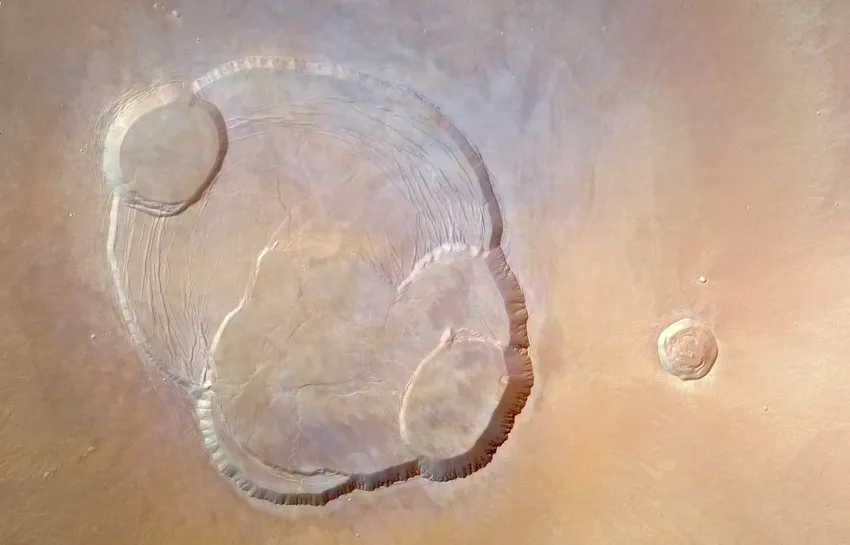
Photo: Andrea Luck / Wikimedia Commons, CC BY 2.0
Widely believed
A belief that circulates holds that scientists have detected active volcanism on Mars, overturning the textbook picture of a geologically dead planet whose giant volcanoes last erupted in the deep past.
What the research says
One source relevant to Mars volcanism is a 2004 Icarus paper known here only by title, so the specific evidence it offers cannot be reported. A second, 2025 source that surfaces under similar search terms is not about Mars's volcanism at all; it uses the Mars–Earth orbital cycle to date an episode of Earth volcanism. Together the available material does not establish a detailed, current picture of active Mars volcanism.
The research does not settle it
This one is real. The Malarkey Institute did not conduct this research and takes no credit for it; sources are listed in full at the end. Everything under Peer-Reviewed Findingsis satire — this is not.
Mars is usually introduced as a dead world: a planet whose colossal volcanoes, among the largest in the solar system, fell silent long ago and will never erupt again. Against that backdrop, a claim circulates that scientists have detected volcanic activity on Mars after all, as if the planet had been caught in the act and the dead-world picture needed retiring. The phrasing usually implies something concrete and current: evidence, detected, now.
What the research actually shows
A paper in Icarus, published in 2004, carries the title “New evidence for a volcanically, tectonically, and climatically active Mars.” That title is a direct claim in exactly the shape the popular belief takes: not just volcanic activity, but tectonic and climatic activity alongside it. Crossref holds no abstract for this paper, so what the “new evidence” actually consisted of — what features were examined, over what timescale, with what degree of confidence — is not part of the record available here. What can be said is that research under this title existed and made this case as of 2004.
A separate paper, published in PNAS in 2025, turns up under similar search terms but is doing something quite different. Its title is “Jurassic constraints on the chaotic Mars–Earth eccentricity cycle linked to the volcanically induced Jenkyns event.” Its subject is Earth’s deep past. It uses the long gravitational beat between Mars’s orbit and Earth’s orbit — a cycle presently running at 2.4 million years — as a kind of clock to date events recorded in Jurassic rock. The “volcanically induced” event named in the title is the Jenkyns Event, tied to volcanism from the Karoo-Ferrar large igneous province on Earth, centered on strata dated to roughly 183 million years ago. Mars appears in this paper only as the gravitational partner whose orbit helps mark time. Its own volcanoes are not the subject.
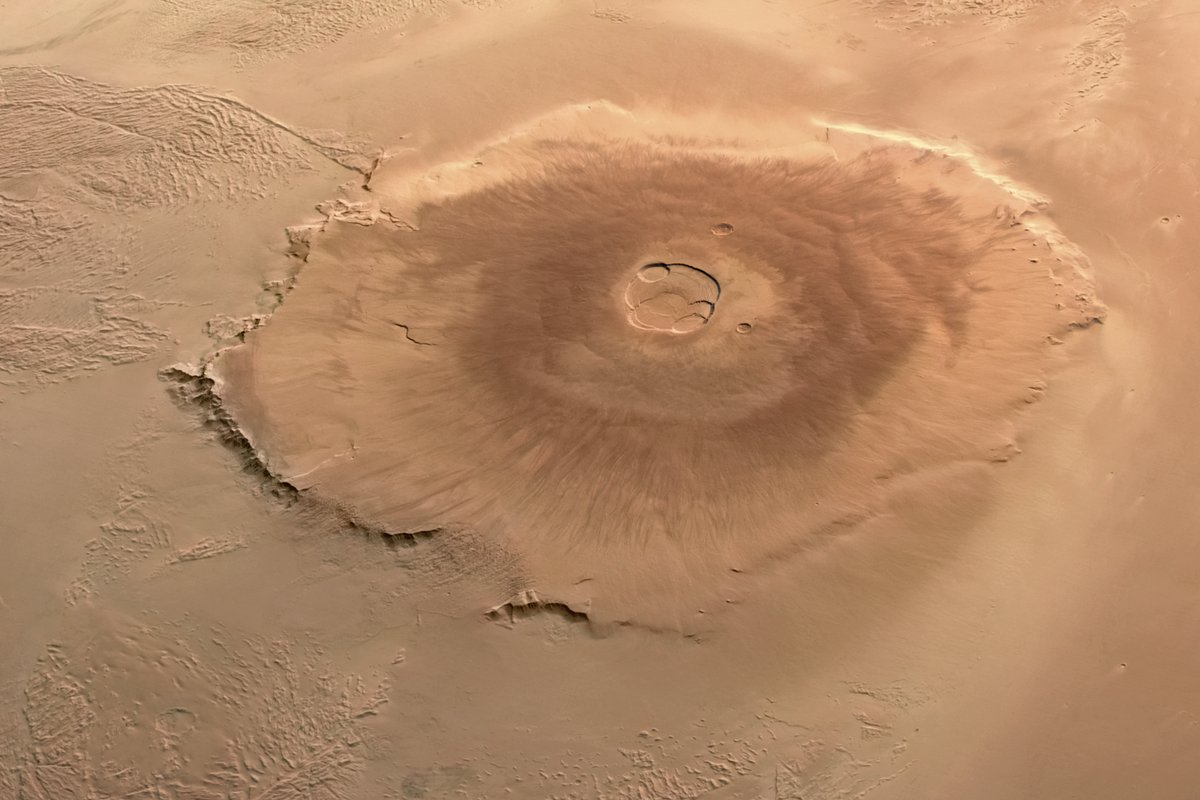
Photo: ESA/DLR/FUBerlin/AndreaLuck / Wikimedia Commons, CC BY 2.0
What it does not show
Taken together, the two sources do not add up to a documented, detailed case that Mars is volcanically active today. The one paper that actually makes a claim about Mars’s own volcanism is known only by its title; the nature and recency of its evidence cannot be reported from what is available. The second paper, despite sharing the words “volcanically” and “Mars” in its title, provides no evidence about Mars’s volcanoes at all — its volcanism belongs to Earth’s Jurassic record. Reading it as confirmation that “scientists detect volcanic activity on Mars” would be a misunderstanding of what it studies. The popular move from “Mars is dead” to “scientists caught it erupting” goes further than this material supports.
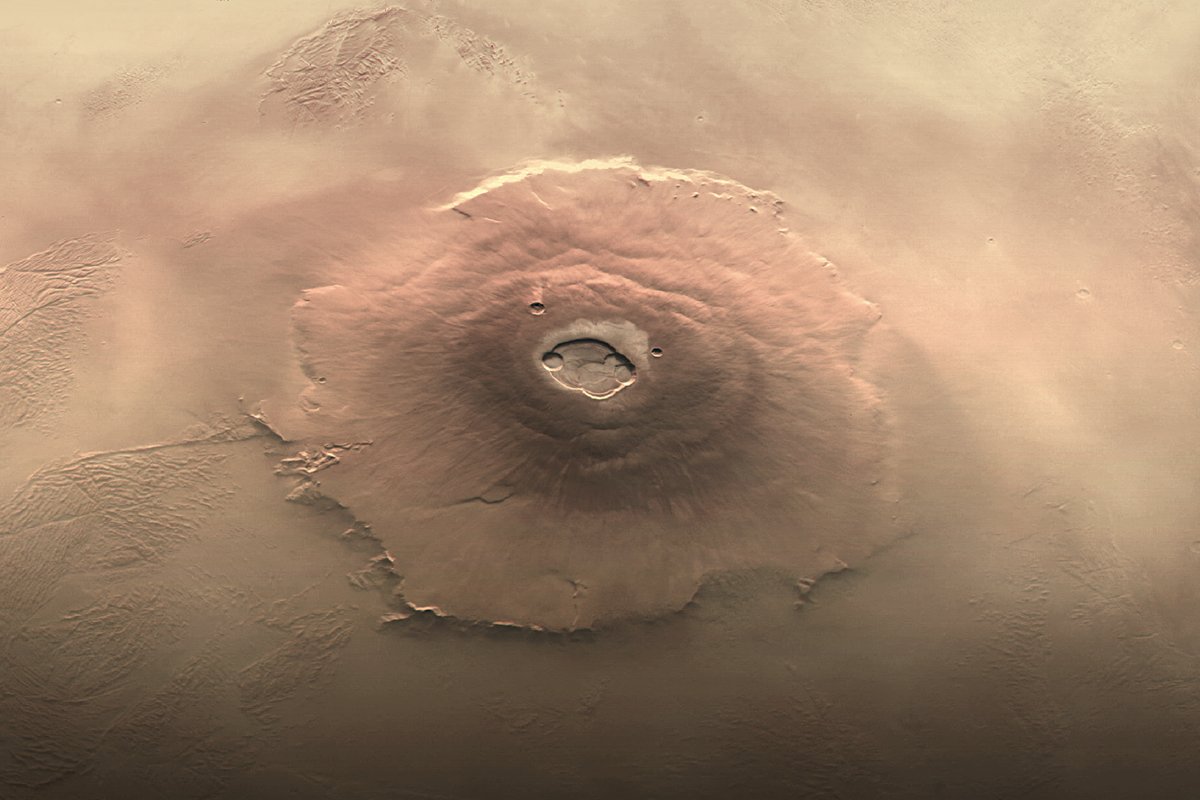
Photo: Jackie Branc / Wikimedia Commons, CC BY 4.0
Why it survives
Mars’s volcanoes are enormous, and the question of whether any of them might still be active is a reasonable one to keep returning to. A title promising “new evidence” for an active Mars, like the 2004 Icarus paper’s, is the kind of claim that travels well on its own, even when the supporting detail behind it isn’t easy to check. And because planetary scientists do sometimes use Mars’s orbit as a tool for dating events in Earth’s own history — as the 2025 paper does — it is easy for the words “Mars” and “volcanic” to land in the same sentence for reasons that have nothing to do with Mars’s own geology at all.
The Malarkey Institute conducted none of this research and takes no credit for it. The studies below are the actual work; we have only read them.
The Institute's short videos on these findings are on TikTok. Watch on TikTok
Sources
Grow Your Confidence,
Not Your Doubts
Subscribe to receive the Institute's latest unverified findings the moment they exist, and well before the fact-checkers arrive.