Daily Random
Sep 11, 2026
Was the Siberian unicorn a real animal?
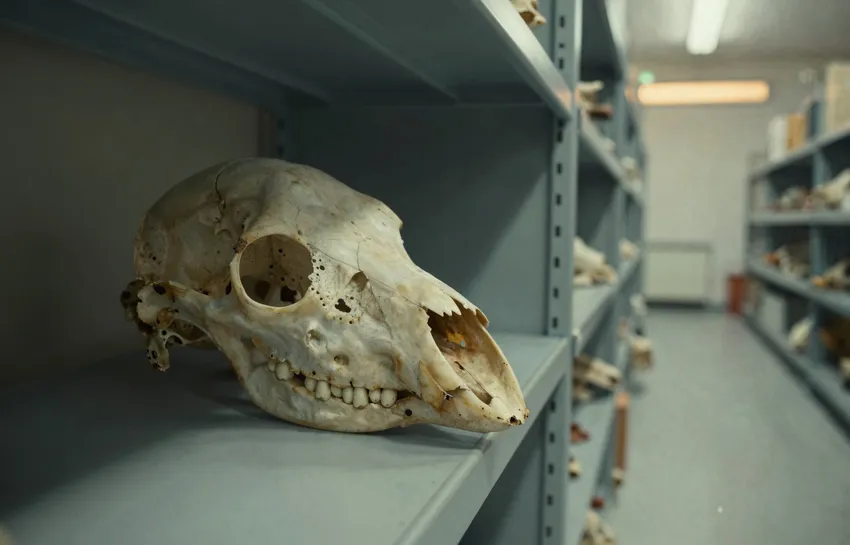
Widely believed
A giant rhinoceros called Elasmotherium, nicknamed the Siberian unicorn, carried a single enormous horn, survived in Siberia until surprisingly recent times alongside early humans, and is the real animal behind the unicorn of legend.
What the research says
The sources confirm that Elasmotherium was a real giant rhinoceros with a deep East Asian lineage, a range reaching Eastern Europe, and an extinction late enough to be studied alongside the other late Quaternary megafaunal extinctions. All are title-only in the material provided, so the horn, the timing relative to humans, and any link to unicorn folklore cannot be checked against them either way.
The research does not settle it
This one is real. The Malarkey Institute did not conduct this research and takes no credit for it; sources are listed in full at the end. Everything under Peer-Reviewed Findingsis satire — this is not.
The belief usually arrives with a picture. A shaggy, heavy-bodied animal, somewhere between a rhinoceros and a horse, stands on a cold steppe with a single horn rising from its forehead. The caption calls it the Siberian unicorn. The story attached to the picture runs roughly as follows: this was Elasmotherium, a giant rhinoceros that lived in Siberia far more recently than anyone once thought, that shared the landscape with early humans, and that is the real animal behind the unicorn of legend. The story is told with confidence, and the animal’s nickname does a good deal of the telling.
The Institute read the published work it could resolve on this genus. All of it reached us as titles only, with no abstracts. What follows is what those titles support and nothing more.
What the research actually shows
A 2018 study in Nature Ecology & Evolution addresses the evolution and extinction of Elasmotherium sibiricum, and its title places that extinction within the wider problem of late Quaternary megafaunal extinctions. Several things follow from the title alone. The animal was real. It was, in the authors’ own description, a giant rhinoceros. And its disappearance was late enough to be treated as part of the same broad pattern of large-mammal loss that marks the late Quaternary, rather than as some remote event from deep prehistory. The paper’s framing suggests its authors regarded this particular extinction as informative about the others.
A 2015 paper in Quaternary International concerns the usefulness of Elasmotherium representatives in the biochronology of the Pleistocene of Eastern Europe. Biochronology is the practice of dating deposits by the fossils they contain. That the genus is useful for this purpose tells us its remains turn up often enough, and change recognisably enough over time, to serve as markers. It also tells us the range was not confined to Siberia. Eastern Europe is in the title.
A 2021 paper in Historical Biology describes the most primitive Elasmotherium known, from the Late Miocene of northern China. This pushes the lineage well back before the Pleistocene and places its early history in East Asia. Whatever the last Elasmotherium looked like, the genus had a long run before it.
A 2021 paper in the Russian Journal of Theriology reports the experience of reconstructing the head of Elasmotherium. The title is modest and worth taking at face value. Reconstructing the head is treated as a task with its own difficulties, described from the reconstructor’s side. The head, in other words, is something that has to be worked out from what survives, not something that is simply known.
What it does not show
None of these titles mentions a horn. The popular image is built around the horn, its length, and its position on the forehead. The material in front of us does not describe it, measure it, or confirm its shape. The existence of a paper devoted to reconstructing the head is, if anything, a reminder that the animal’s appearance is inferred rather than observed. That is not a reason to doubt the horn. It is a reason not to cite these sources for it.
None of these titles mentions humans. The claim that Elasmotherium overlapped with early people in Siberia may well rest on the dating work in the 2018 study, but we cannot see that work, and we will not report a date we have not read. Any figure a reader has encountered for when the last Siberian unicorn lived is not in the text provided here.
None of these titles mentions folklore. The suggestion that this rhinoceros is the origin of the unicorn myth is a claim about the history of stories, not about the fossil record, and no paper in this set addresses it. The sources neither support nor contradict it.
The popular correction deserves the same treatment. It is sometimes said in reply that the Siberian unicorn is an overhyped name for an ordinary extinct rhino of no special interest. The 2018 study’s title cuts against that dismissal by presenting the animal’s extinction as a case that sheds light on megafaunal extinctions generally. Whatever it was, the specialists did not think it was unremarkable.
Why it survives
The belief survives because most of its skeleton is sound. There really was a giant rhinoceros of this name. It really did live late enough to belong to the age of vanished megafauna. A large, real, horned animal that disappeared within the span of human memory is precisely the sort of thing that seems to explain an old story, and the nickname makes the connection feel already settled. A reader who repeats it is not being foolish. The reader is being handed a true core wrapped in details the available literature does not, in the form we could read it, confirm.
The Malarkey Institute conducted none of this research and takes no credit for it. The studies below are the actual work; we have only read them.
Watch the Institute's video
Watch on TikTok
Sources
- Evolution and extinction of the giant rhinoceros Elasmotherium sibiricum sheds light on late Quaternary megafaunal extinctions
- The experience in reconstructing of the head of Elasmotherium (Rhinocerotidae)
- On the importance of the representatives of the genus Elasmotherium (Rhinocerotidae, Mammalia) in the biochronology of the Pleistocene of Eastern Europe
- The most primitive Elasmotherium (Perissodactyla, Rhinocerotidae) from the Late Miocene of northern China
Grow Your Confidence,
Not Your Doubts
Subscribe to receive the Institute's latest unverified findings the moment they exist, and well before the fact-checkers arrive.