Daily Random
Oct 15, 2026
Did a Chinstrap Penguin Colony Really Lose Nearly Two-Thirds of Its Population?
Widely believed
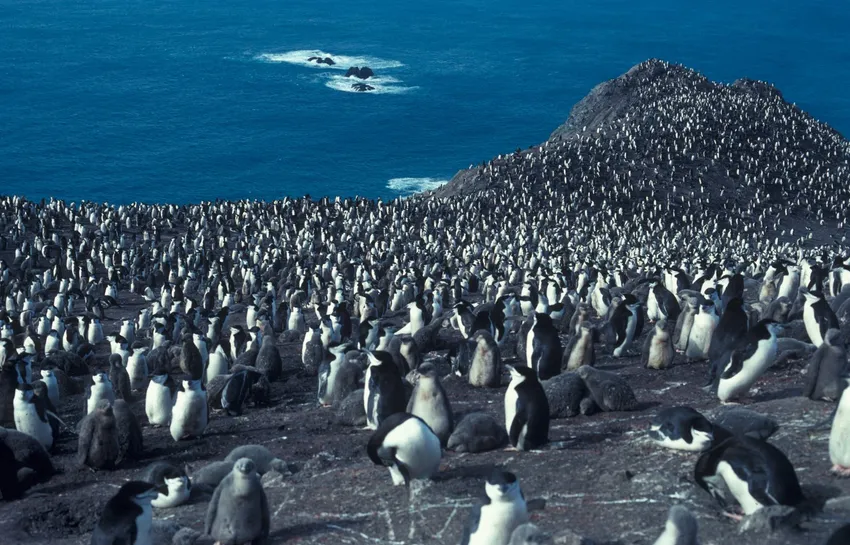
The belief circulating holds that a chinstrap penguin colony in Antarctica has lost nearly two-thirds of its population, presented as hard evidence of a sudden, severe collapse in the species across the continent.
What the research says
A 2026 drone-survey paper in Polar Biology does report a "severe" chinstrap penguin decline in an Antarctic specially protected area, and separate 2022 work shows drones and satellites are now used together to map these colonies in detail. But none of the three sources available here includes an abstract giving the actual percentage lost, the location, or the time span, so the specific "nearly two-thirds" figure cannot be checked against this text.
The research does not settle it
This one is real. The Malarkey Institute did not conduct this research and takes no credit for it; sources are listed in full at the end. Everything under Peer-Reviewed Findingsis satire — this is not.
The claim travels in a familiar shape: a chinstrap penguin colony that once held a certain number of breeding pairs is said to have shrunk by nearly two-thirds, offered as proof that the species is collapsing across Antarctica, fast and all at once.
What the research actually shows
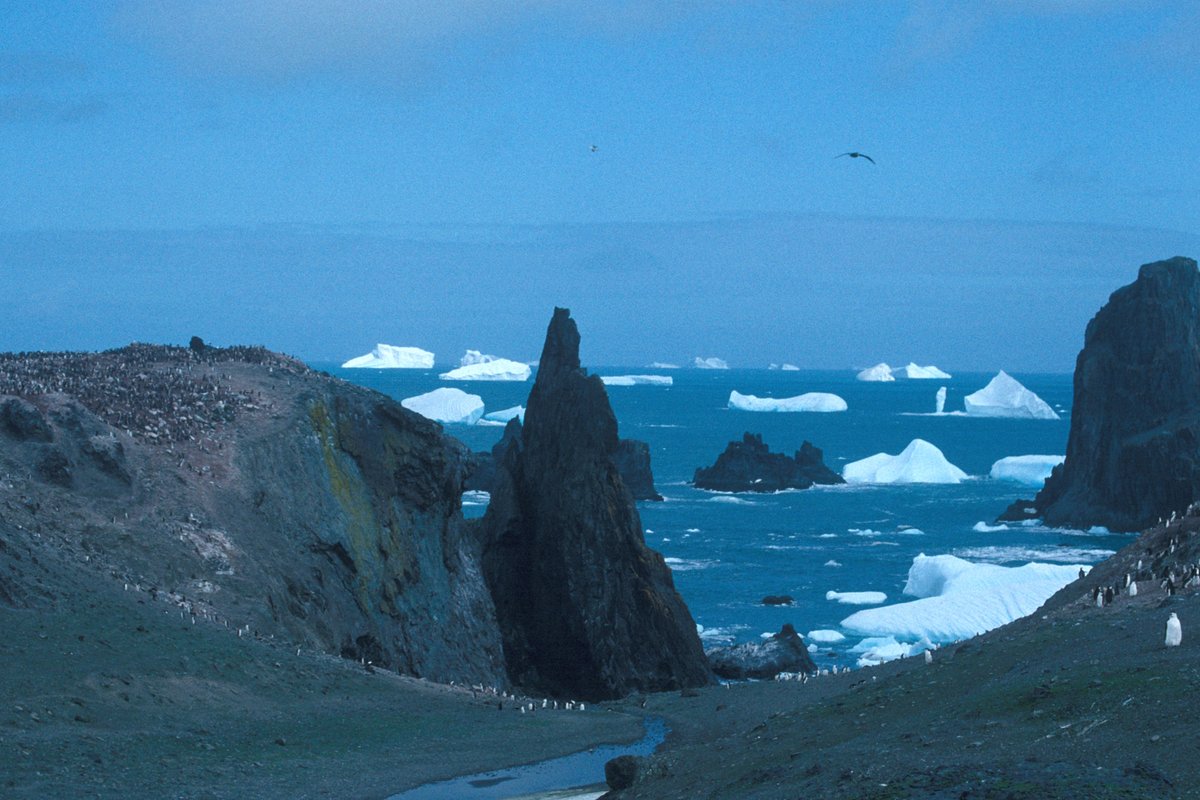
A 2026 paper in Polar Biology, titled “Drone survey reveals a severe chinstrap penguin decline and a novel gentoo colony in an Antarctic specially protected area,” is the piece of literature that most directly bears on this. The title itself confirms that a drone-based survey of a protected Antarctic site found a severe decline in chinstrap numbers, and that the same survey turned up a new gentoo penguin colony nearby. No abstract for this paper is held in the record consulted here, so what follows from the title is limited to that: a severe decline was found, by drone survey, in a specially protected area, and it was severe enough to be the headline finding of the paper.
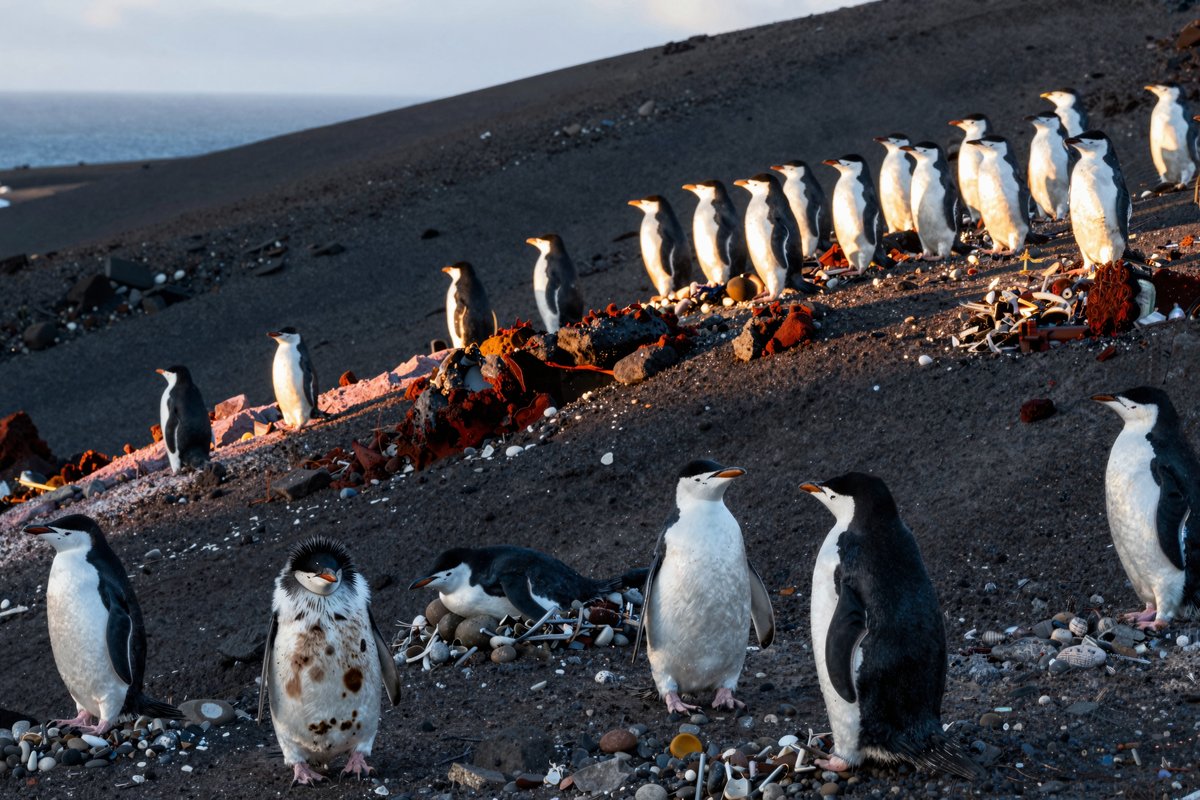
A 2022 paper in GIScience & Remote Sensing, on high-spatial-resolution UAV multispectral data complementing satellite imagery to characterize a chinstrap penguin colony ecosystem on Deception Island, establishes that this general method, drones paired with satellite imagery, is an active and documented way of mapping chinstrap colonies in fine detail. It does not, from its title alone, report a decline figure of its own.
A 2001 paper in Waterbirds, on bill size in relation to position in the colony in the chinstrap penguin, concerns a different question entirely: physical variation among birds depending on where they nest within a colony. It has nothing to say about colony size over time and is not evidence for or against any decline claim.
What it does not show
None of the three sources, as held here, gives the number that the circulating claim rests on. The 2026 Polar Biology title confirms a severe decline was documented by drone survey somewhere in an Antarctic specially protected area, but without an abstract there is no percentage, no prior population count, no date range, and no stated cause attached to that title. Whether that decline is the nearly-two-thirds figure in circulation, a larger one, a smaller one, or a decline at a different site altogether, is not something this text can settle.
The opposite error is just as easy to make. It would be wrong to treat the absence of a confirmed percentage as evidence that no serious decline occurred, or that the claim is invented. The title of a 2026 peer-reviewed survey using the word “severe” is not nothing. It simply is not, by itself, a verified two-thirds.
The 2022 UAV and satellite paper shows that colony-mapping methods capable of producing precise, repeatable counts exist and are being used at sites such as Deception Island. That supports the idea that modern decline figures, when they are published, tend to come from better instrumentation than older ground counts did. It does not supply a specific loss figure either.
Why it survives
Drone and satellite surveys of Antarctic penguin colonies are relatively new, and when one turns up a sharp drop at a site that was last counted by older, cruder methods, the contrast between the old number and the new one is visually and numerically dramatic. A severe decline, stated plainly in a paper’s own title, is the kind of finding that travels easily and gets attached to a specific, memorable fraction even when the underlying figure for that fraction has not been checked against the source.
The Malarkey Institute conducted none of this research and takes no credit for it. The studies below are the actual work; we have only read them.
The Institute's short videos on these findings are on TikTok. Watch on TikTok
Sources
- Bill Size in Relation to Position in the Colony in the Chinstrap Penguin
- High-spatial resolution UAV multispectral data complementing satellite imagery to characterize a chinstrap penguin colony ecosystem on deception island (Antarctica)
- Drone survey reveals a severe chinstrap penguin decline and a novel gentoo colony in an Antarctic specially protected area
Grow Your Confidence,
Not Your Doubts
Subscribe to receive the Institute's latest unverified findings the moment they exist, and well before the fact-checkers arrive.