Daily Random
Sep 18, 2026
Does published research explain the Akhal-Teke's metallic golden coat?
Widely believed
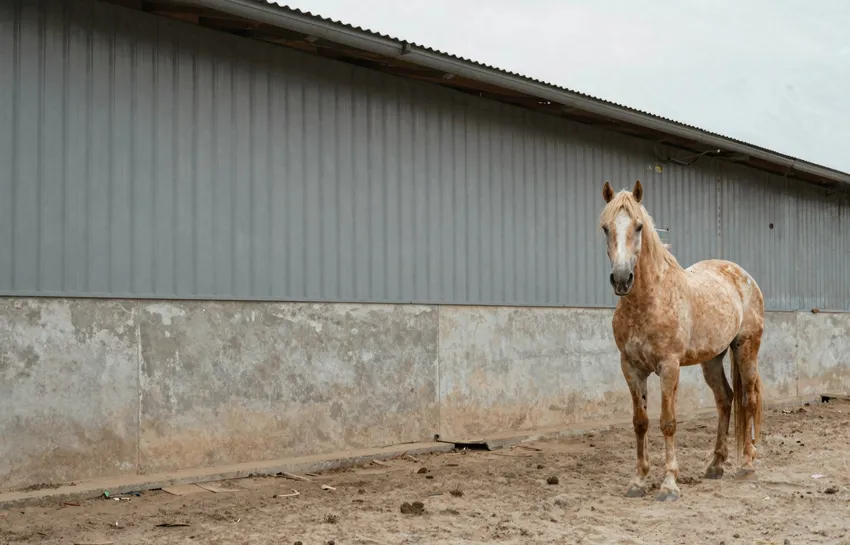
The Akhal-Teke is defined by a metallic, golden coat that shines like polished metal, a sheen unique to the breed and the main reason it is known at all.
What the research says
None of the available papers on the Akhal-Teke measures, describes or explains a metallic sheen. They establish high genetic diversity across the breed's lines, a maternal lineage with affinity to a Tang Dynasty horse, and a recessive hairlessness defect at a frequency of 0.054, but the coat claim is left neither confirmed nor contradicted.
The research does not settle it
This one is real. The Malarkey Institute did not conduct this research and takes no credit for it; sources are listed in full at the end. Everything under Peer-Reviewed Findingsis satire — this is not.
The Akhal-Teke is usually introduced by its coat. The belief that circulates is simple: this is the golden horse, the breed whose hair catches light like polished metal, and the shine is the point. In the popular telling the sheen is treated as the breed’s signature, sometimes as something no other horse can produce, and often as the reason the breed is known at all.
That is the story. The papers in front of us are all about the Akhal-Teke, and none of them is about the coat.
What the research actually shows
A 2019 study in Horse breeding and equestrian sports typed 5400 Akhal-Teke horses at 17 microsatellite DNA loci, drawn from 20 genealogical lines. It identified 121 alleles across those loci, 16 of them rare, at frequencies below 5%. Every line showed a high level of genetic diversity on the measures reported, Ae and Ho, and the Fis values were negative throughout. The authors read this as a breed that has kept its genetic balance. It is a paper about how much variation the breed carries, not about what any of that variation looks like on the animal.
A 2024 study in Genes worked from the other end of history. It recovered ancient DNA from horse remains in the Shihuyao tombs in Xinjiang, dated to the Han and Tang Dynasties, roughly 2200 to 1100 years ago. Two high-quality mitochondrial genomes were sequenced and assigned to maternal haplogroups B and D. The Tang Dynasty horse showed a close genetic affinity with modern Akhal-Teke horses through a haplotype the authors call G1. They point to the ancient Silk Road as having a vital role in dissemination, and they suggest, from the maternal record, that the early domestication of the breed was for military purposes. Mitochondrial DNA tells a maternal story. It says nothing about coat.
A 2018 paper in the same journal reports the genetic cause of what breeders call bald foal syndrome in the Akhal-Teke. The defect is inherited as a monogenic autosomal recessive trait, and the authors give its frequency in populations in different countries as 0.054, with figures also broken down by line and family. This is the only paper in the set that concerns hair at all, and it concerns its absence.
Another paper, from 2024, addresses speed indicators in the breed over the period 2018-2020. Only its title is available to us. We can say it exists and what it is about. We cannot say what it found.
What it does not show
Nothing here measures, describes or explains a metallic sheen. No paper in this set examines coat colour, hair structure, light reflection or the genetics of pigmentation. If a reader wants to know whether the golden shine is real, whether it is unique to the breed, what causes it, or how common it is among Akhal-Teke horses, these sources do not answer. The belief is neither confirmed nor contradicted by them.
That cuts in both directions. The occasional correction, that the shine is exaggerated, or that other breeds show it just as well, or that most Akhal-Tekes are not golden at all, is not established by this material either. The absence of a coat study is not evidence about the coat.
What the sources do establish is that the breed is more than its coat in the scientific record. It has been studied for its diversity, its deep maternal history, its speed, and a heritable defect. The hair trait with a documented genetic mechanism in this set is a recessive hairlessness, not a shine.
Why it survives
The belief survives because the coat is what a person sees first, and a distinctive look is the easiest thing about any animal to remember and pass on. A breed with a maternal line reaching back to a Tang Dynasty horse and a carefully preserved gene pool is a harder story to tell than a horse that looks gold. The shorter story travels. That does not make it wrong. It means the papers that would test it are not the ones in front of us.
The Malarkey Institute conducted none of this research and takes no credit for it. The studies below are the actual work; we have only read them.
Watch the Institute's video
Watch on TikTok
Sources
- GENETIC DIVERSITY OF AKHAL-TEKE HORSE BREED ON THE MICROSATELLITE DNA LOCI
- СHARACTERISTICS OF SPEED INDICATORS OF AKHAL-TEKE HORSE BREED FOR THE PERIOD 2018-2020
- Ancient Mitochondrial Genomes Provide New Clues in the History of the Akhal-Teke Horse in China
- GENODIAGNOSIS OF THE SYNDROME OF BALD FOALS IN AKHAL-TEKE HORSES
Grow Your Confidence,
Not Your Doubts
Subscribe to receive the Institute's latest unverified findings the moment they exist, and well before the fact-checkers arrive.