Jul 01, 2026
Avid Skydivers Develop Significantly Larger Nostrils Over Time
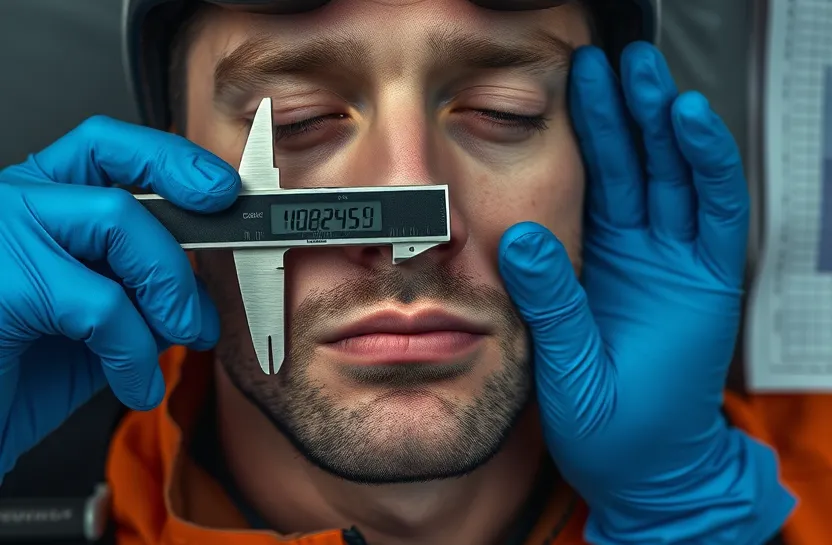
Every skydiver knows the feeling: terminal velocity arrives, and roughly 120 miles per hour of air goes exactly where it wants — which is up the nose. According to new measurements from the Malarkey Institute’s Bureau of Airborne Anatomy, that airflow does more than sting. Over hundreds of jumps, it gradually and permanently widens the nostrils, leaving veteran jumpers with measurably larger nasal openings than the ground-dwelling public.
The Bureau describes the effect as cumulative, irreversible, and — in the case of one tandem instructor with 4,000 jumps — audible.

The Science (Conducted at Altitude, Verified Nowhere)
The mechanism, which we are calling “aerodynamic dilation” because nobody stopped us, is straightforward. The nostril is an intake valve. Subject that valve to sustained ram-air pressure, jump after jump, and it does what any hardworking valve would do: it upsizes. The cartilage yields. The aperture grows. The face, in its own quiet way, adapts to the sky.
“We measured the nostrils of ninety veteran skydivers using a device we built from a wine cork and a digital caliper,” said Dr. Fenwick Malarkey, director of the Bureau of Airborne Anatomy. “The results amazed us, though it is worth noting we had no control group, and when someone offered to be one, we said no.”
The Bureau’s longitudinal data — collected longitudinally, in the sense that the subjects were falling — shows a clean dose-response curve:
| Lifetime jumps | Mean nostril aperture (vs. baseline) |
|---|---|
| 0 (control-ish) | 100% |
| 100 | 109% |
| 500 | 138% |
| 1,000+ | unmeasurable (subject exhaled) |

The Numbers (Collected Mid-Freefall, Somehow)
What This Means For You
The applications, as always, suggest themselves. Chronic congestion sufferers may wish to skip the neti pot entirely and simply exit an aircraft. Mouth-breathers — long stigmatized, long ignored — finally have a path back to nasal respectability, and that path is at 13,000 feet. And competitive free-divers, who spend fortunes on breathing coaches, could in theory achieve the same intake capacity with a weekend certification course and a firm handshake.
The Bureau also notes that veteran jumpers report “smelling the drop zone before seeing it,” a claim we recorded enthusiastically and investigated never.
A Word of Caution
We are not suggesting you take up skydiving to treat a stuffy nose. Skydiving is a serious sport with real training requirements, and the Institute reminds readers that it remains, above all, an extremely effective way to reach the ground. We are simply presenting numbers we generated ourselves and admiring the shape they make.
Satire disclaimer: This article is a work of parody. None of it is true. Skydiving does not enlarge your nostrils, “aerodynamic dilation” is not a real phenomenon, and no wine cork was ever calibrated. Skydive with certified instructors, treat congestion with actual medicine, and leave your nose out of it.
Related Blogs
See All Blog
Avid Skydivers Develop Significantly Larger Nostrils Over Time
Every skydiver knows the feeling: terminal velocity arrives, and roughly 120 miles per hour of air goes exactly where it wants — which is up

Why People With Bad Oral Hygiene Have an Improved Tolerance of Spicy Foods
For decades, dentists have insisted that brushing twice a day is non-negotiable. But an emerging line of research is complicating that advic

Standing Near a Microwave 10 Minutes a Day Improves Your Eyesight
If you spend your days staring at a monitor — gamers, remote workers, anyone whose optometrist sighs when they walk in — you have probably a
Read Everywhere, Verified Nowhere
Everything you need to believe confidently, gathered in one place and verified by absolutely no one.
Read the FindingsCited in 160+ Countries

Canada

Brazil

Scotland

Qatar
Canada
Brazil
Scotland
Qatar

Ecuador

Argentina

Honduras

Romania
Ecuador
Argentina
Honduras
Romania

Guinea

Cuba
Canada
Brazil
Guinea
Cuba
Canada
Brazil
Scotland
Qatar
Ecuador
Argentina
Scotland
Qatar
Ecuador
Argentina
Our findings have crossed borders faster than any fact-checker could follow.
12M Believers Reached

Millions have read our work and, crucially, chosen not to look any deeper.
Grow Your Confidence,
Not Your Doubts
Subscribe to receive the Institute's latest unverified findings the moment they exist, and well before the fact-checkers arrive.